

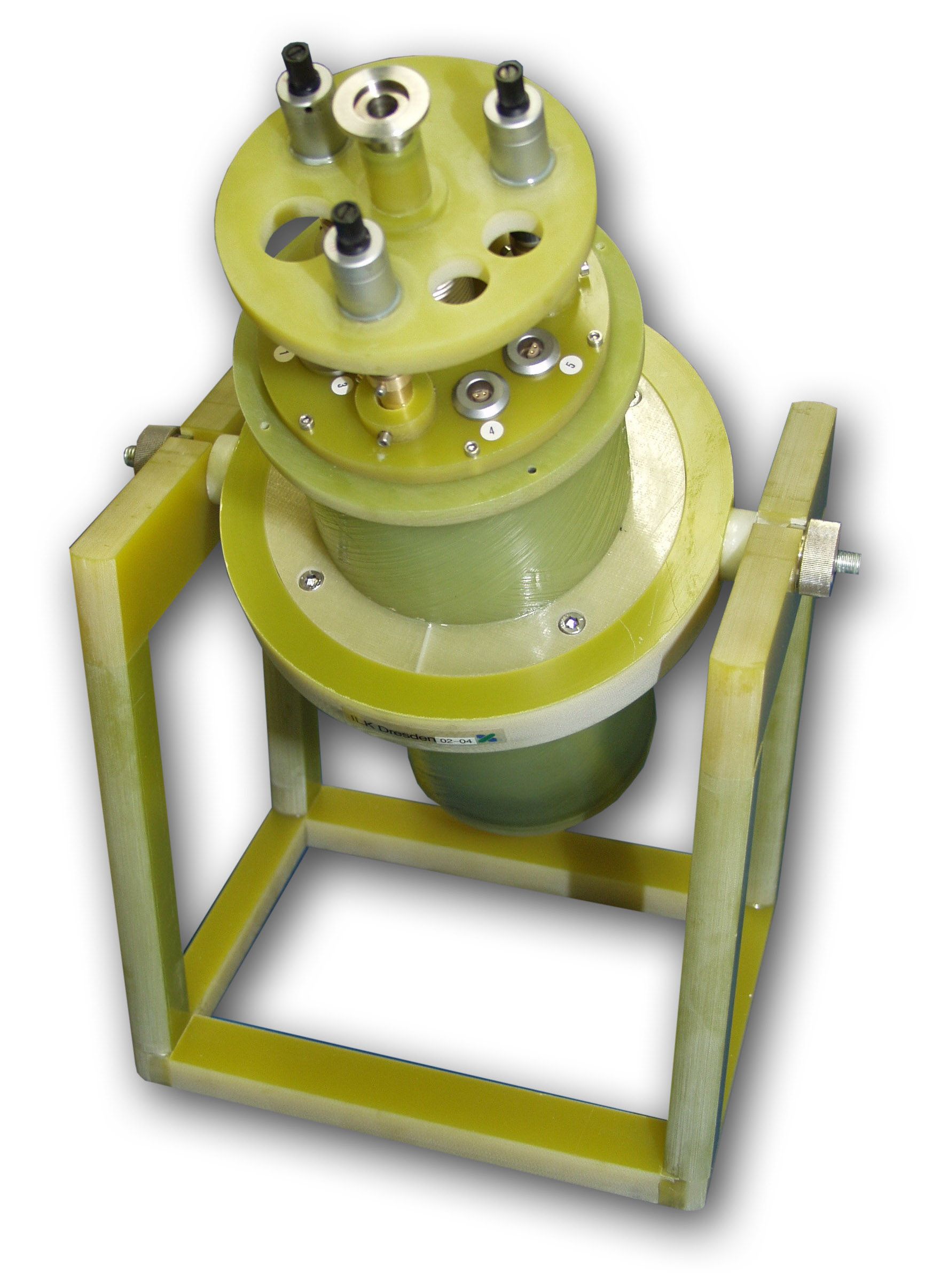
Position-independent, non-metallic, long service life
For cooling sensors with liquid nitrogen or helium, application-specific cryostats have been developed from metal or, as non-metallic variants, from glass-fiber-reinforced epoxy resin (GFRP). These cryostats are highly versatile and can be customized to meet customer requirements. In particular, metal-free GRP cryostats with special properties have been developed for cooling superconducting current limiters and SQUIDs (highly sensitive magnetic field sensors), which can also be designed as pressurized units. We have many years of experience in the design of cryostats and possess the necessary expertise for their manufacture and testing.
ILK Cryostats Product Portfolio
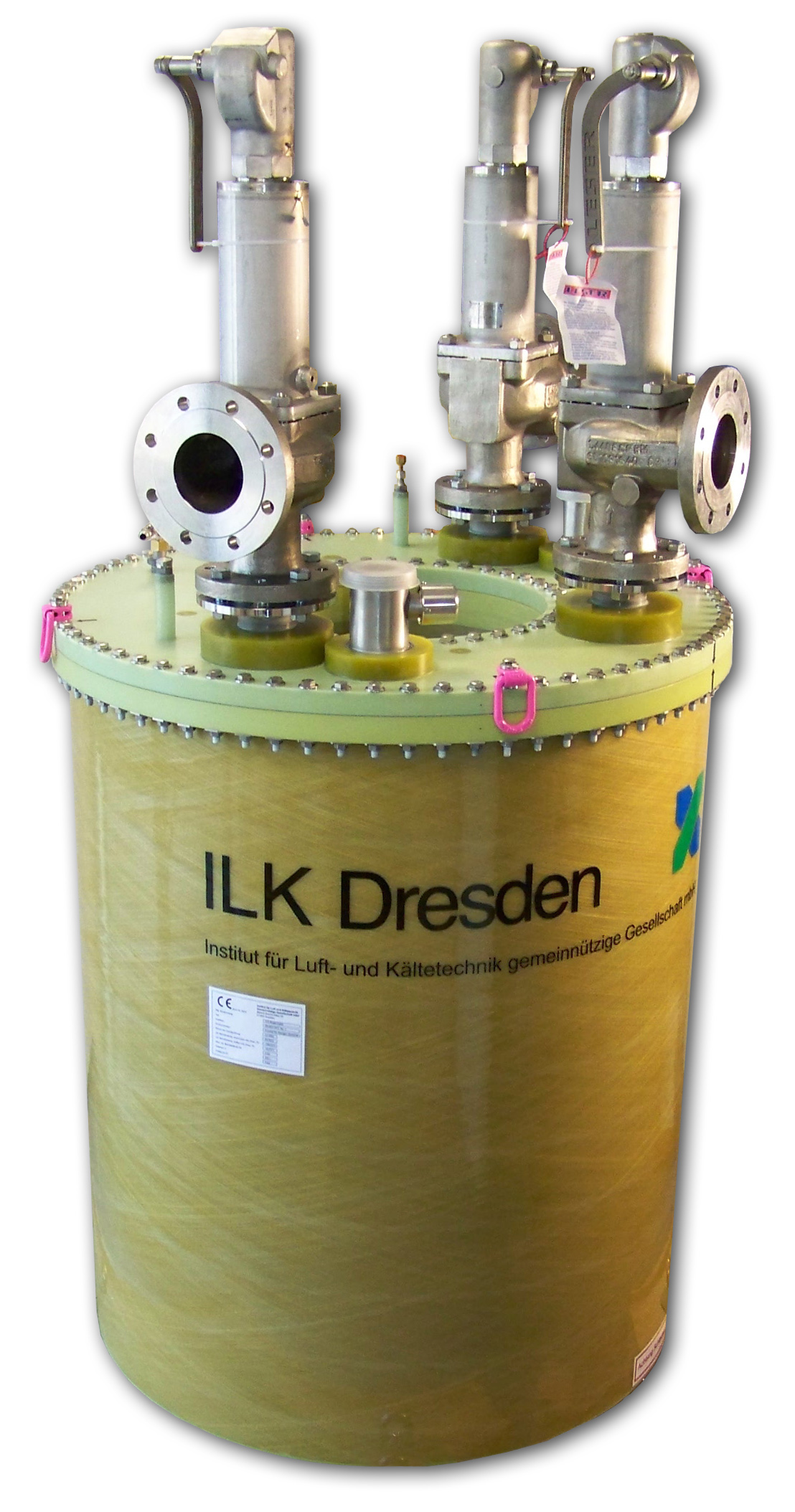
Key features of ILK cryostats made of fiberglass-reinforced plastic (FRP) and metal include:
- Operating temperatures from 4 K to 350 K, with very high temperature stability (e.g., 3 mK for metal cryostats used to cool optical sensors)
- Also available in GRP as a pressurized unit
- Variable filling volumes from 200 ml to 1000 liters
- Automatic filling and recondensation, as well as optional individual sensor systems for monitoring, are available
- Very low evaporation losses
Additional Coats of Paint
- Long vacuum service life
- Leak rate achievable with GRP typically 10⁻¹⁰ mbar·l/s
- RF noise < 1% in the range from 10 Hz to 2 MHz
- Magnetic noise less than 3 fT/Hz½
- Very small cold-to-hot gaps, up to 2 mm for finger cryostats
Material Testing
FRP cryostats for materials testing can be manufactured with an adjustable cold-to-hot distance (z-axis) and are position-independent. For measurements of extremely weak magnetic fields (cardiac and brain diagnostics), a device for adjusting the x-y position of the sensor can be installed, and the cryostat can be mounted on a swivel. Complete orientation independence (360° rotation) with consistent cooling capacity and temperature stability is possible. GRP cryostats, e.g., for geological surveys, are also available with solid-state insulation. Laser-assisted gas analysis using laser diodes requires metal cryostats that meet very stringent requirements for temperature stability of 3 mK at the sensor location. Custom designs according to customer specifications are possible.
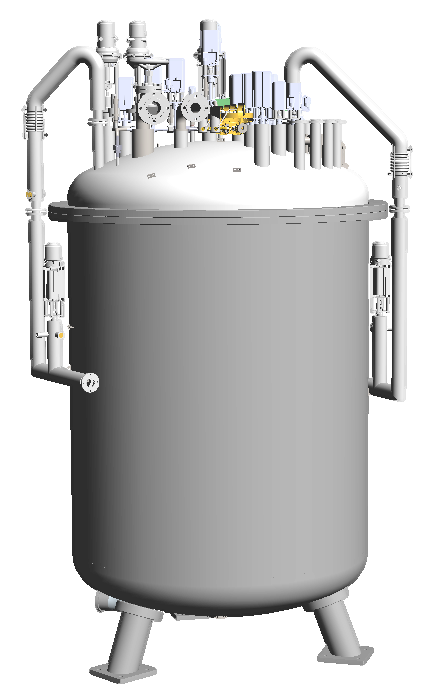
Examples
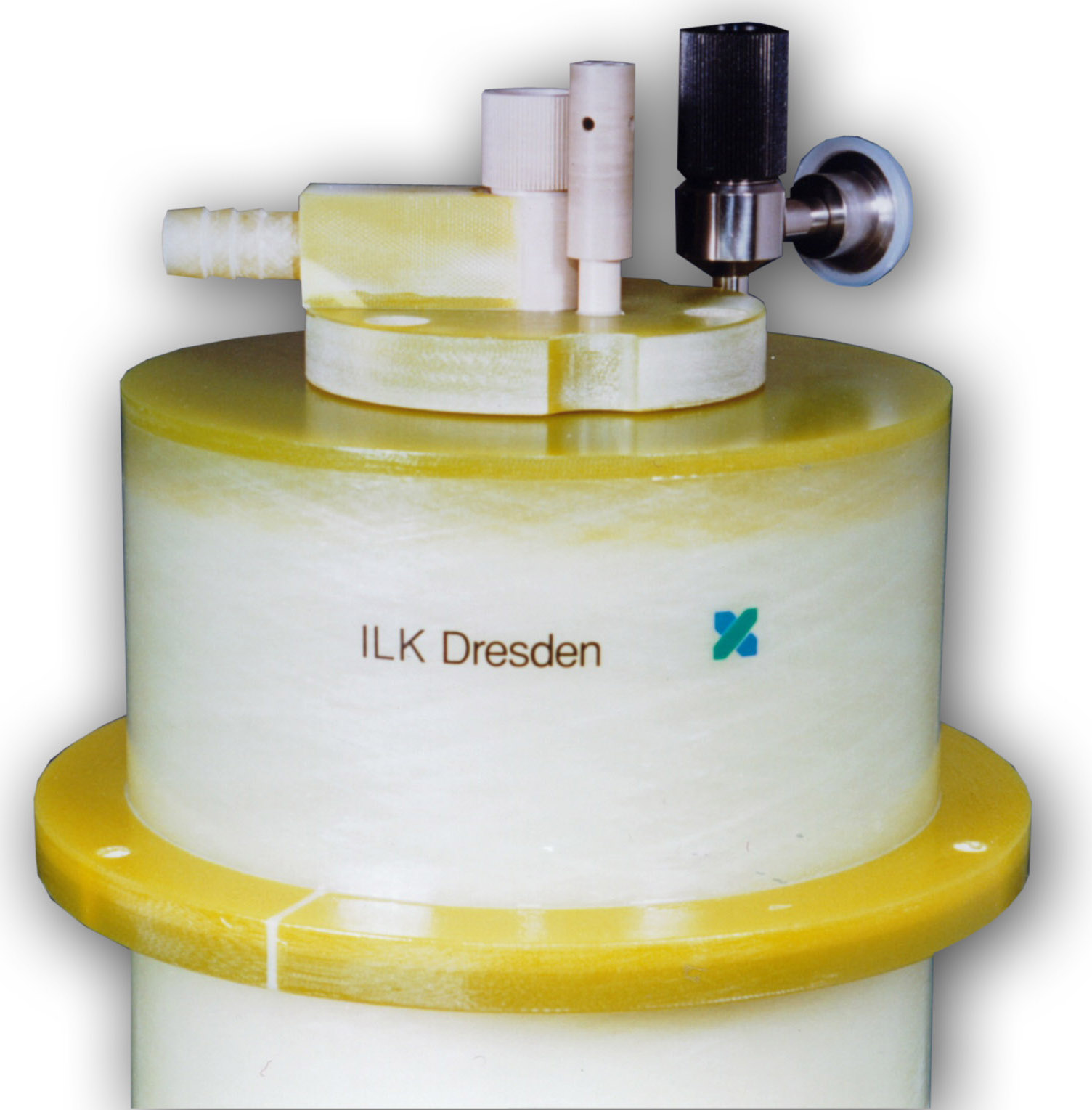
- First position-independent non-metallic helium cryostat (e.g., for sensor cooling); made of fiberglass-reinforced plastic (FRP), with an exhaust-cooled radiation shield, without an LN2 reservoir. 0.1 W heat input (equivalent to 3 liters of LHe per day).
- First LN₂ bath cryostat made of GRP for sensor cooling, without a neck tube and featuring a special plug; consumption 0.9 liters of LN₂ per day, filling volume 32 liters, corresponding to a service life of more than 35 days.
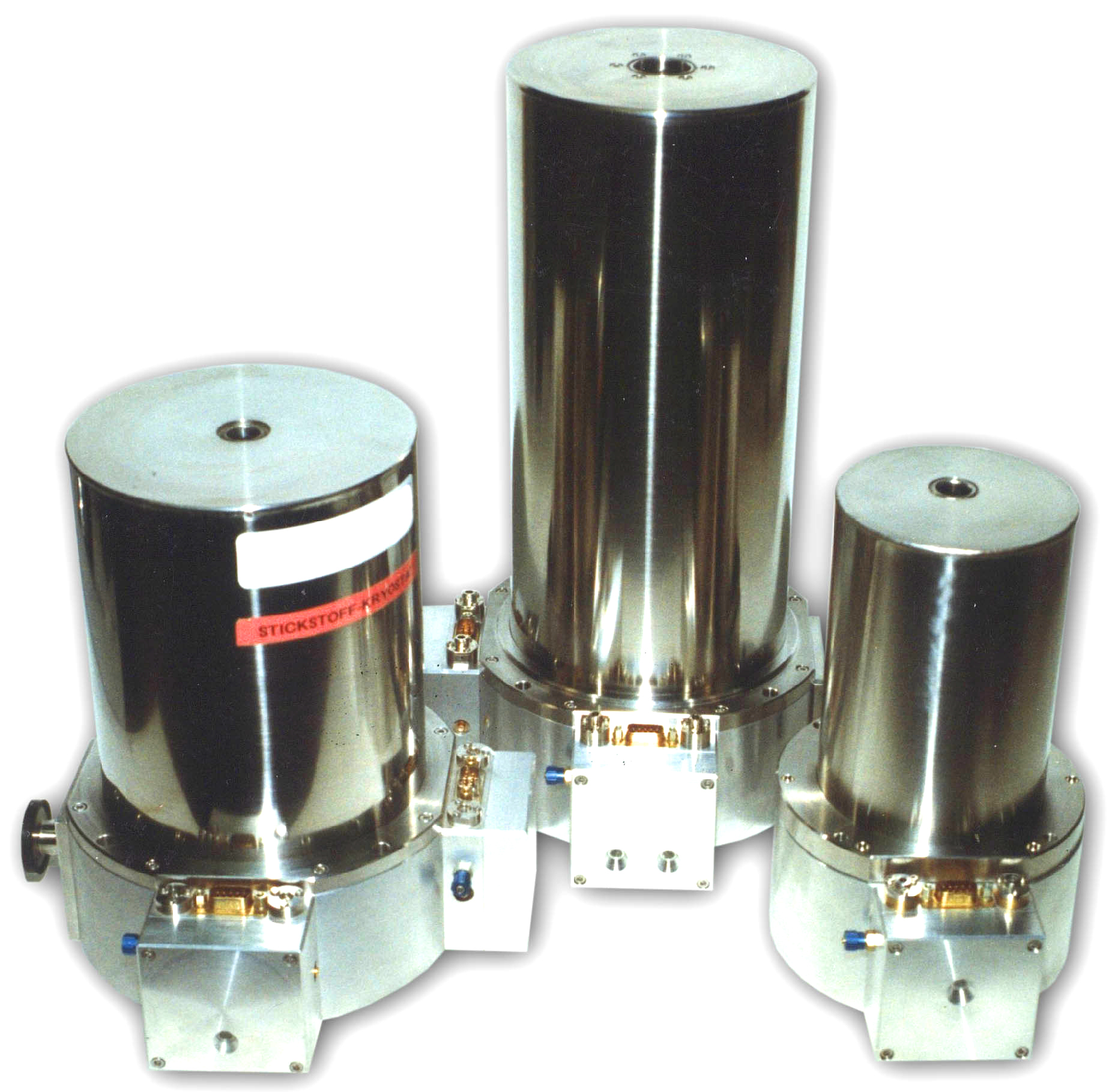
More Examples
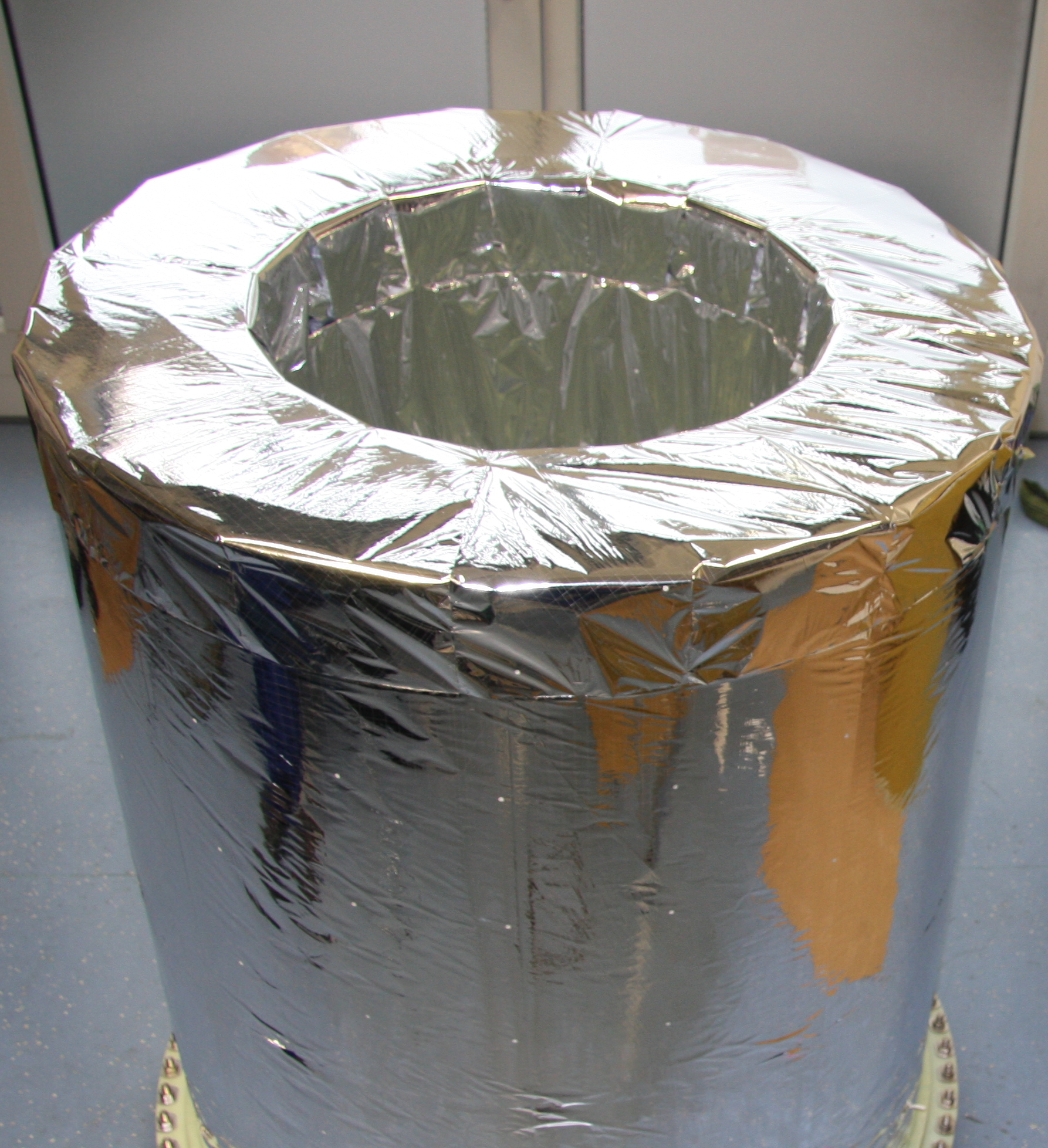
- For GRP ring cryostats used as pressure vessels, without insulation on the lid, and suitable, among other things, for cooling HTSL components, a heat input of less than 6 W / m² (depending on the design) can be achieved.
