
Separation of high-purity helium from natural gas with very low helium concentrations
Helium is a highly valuable noble gas with numerous applications across a wide range of industrial and research fields. For example, liquid helium is indispensable as a coolant in cryogenic systems such as magnetic resonance imaging. On Earth, the most significant natural sources of helium are found in the atmosphere and in natural gas. Due to its low concentration in air—only about 0.0005%—helium is primarily extracted from natural gas. In recent years, however, an extreme global helium shortage has emerged, resulting in acute supply bottlenecks in some cases and a sharp rise in prices. Against this backdrop, the R&D project (preliminary research) described here at ILK Dresden investigated new approaches and innovative processes for separating helium from natural gas. In particular, these approaches are intended to enable the efficient extraction of high-purity helium even from natural gas with very low helium concentrations. The development project focused on the following processes, which were investigated both theoretically and experimentally:
- Development and investigations of swirl tubes
- Investigations of novel cryogenic membranes for helium separation
- Investigations of the condensation and adsorption stages within the helium extraction process
- Modeling of the overall process
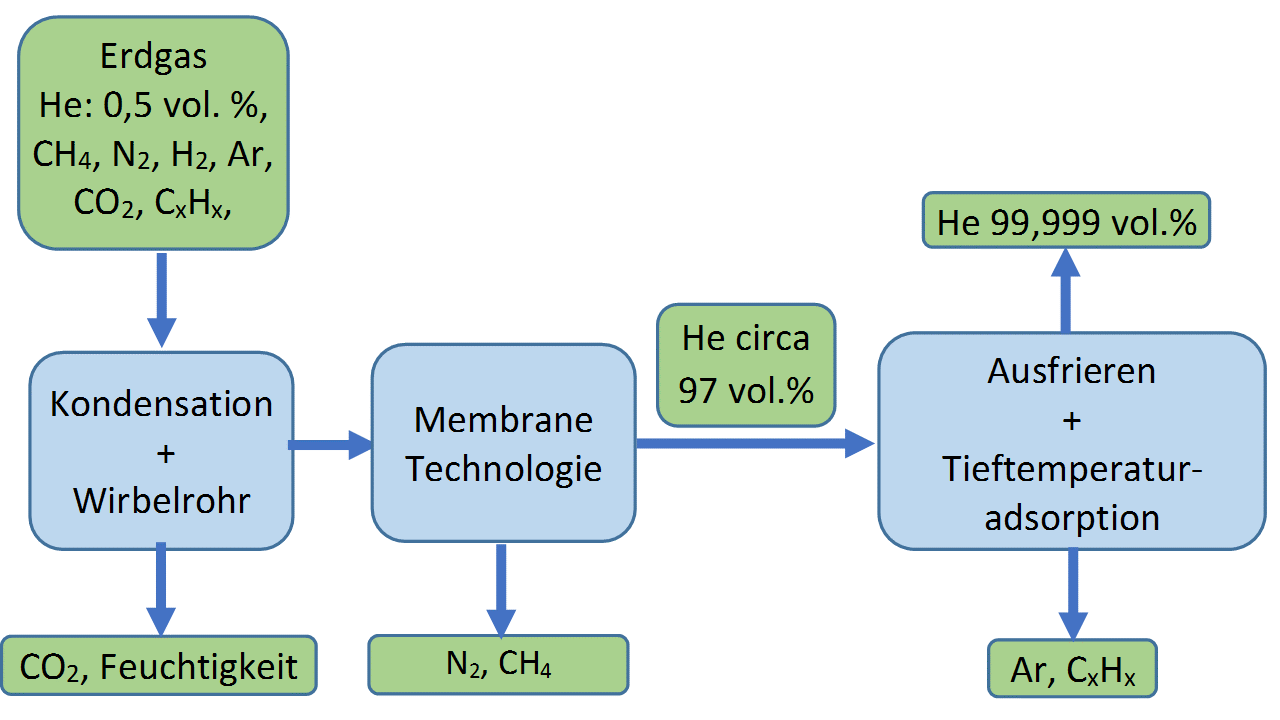
Figure 1 shows a schematic representation of the process. The starting point is natural gas (raw gas) containing less than 0.5 Vo
