The German federal government’s hydrogen strategy is based on the premise that increased use of this energy source will help achieve climate neutrality. This National Hydrogen Strategy (NWS for short), announced in 2020, was updated again in July 2023 to accelerate its implementation. Apparently, the pace of implementation is still too slow, and there are too few applications available on the market.
Dipl.-Ing. (FH)
Thomas
Birnbaum
Areas of application
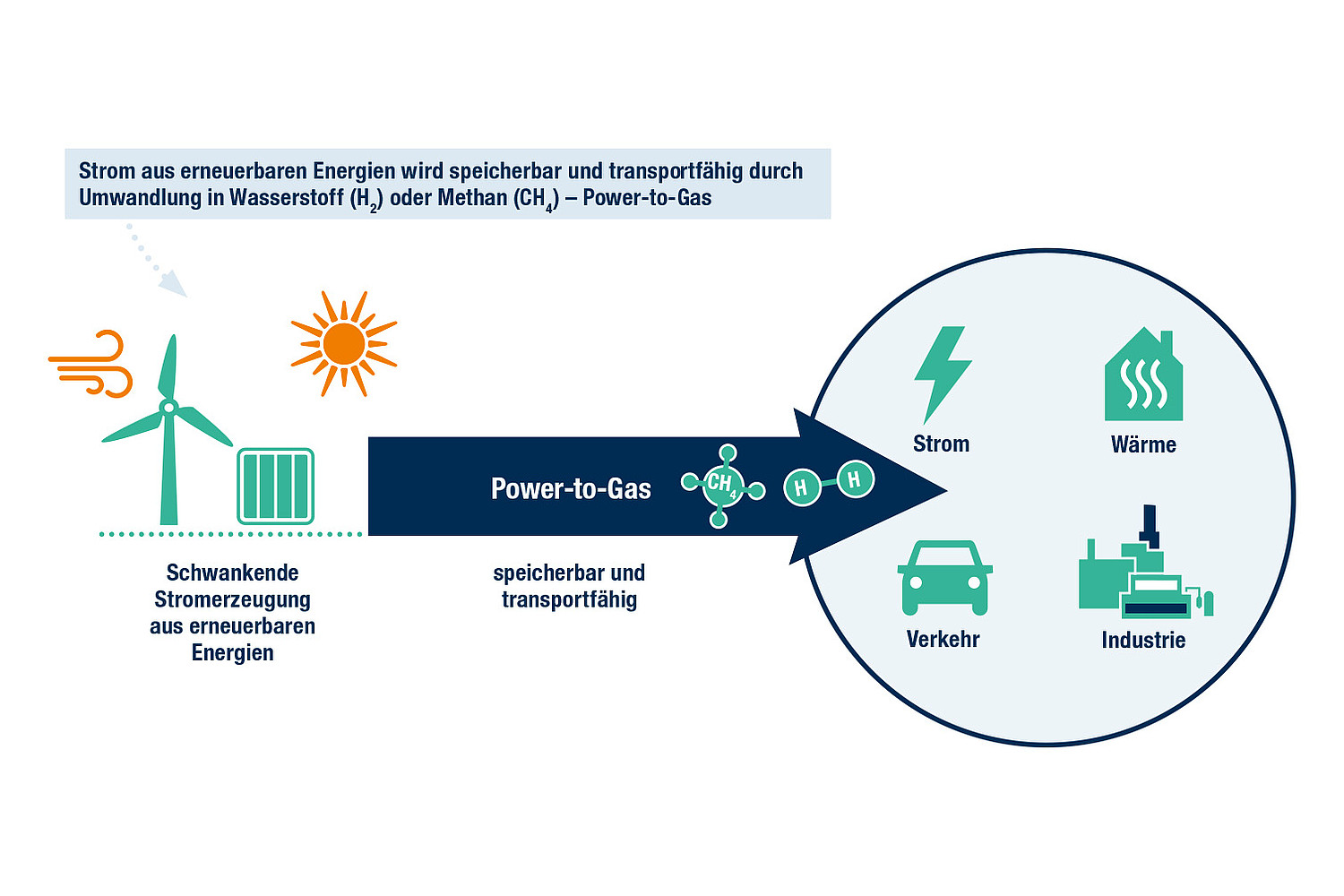
Currently, 11.3 million single-room solid-fuel fireplaces in Germany make a significant contribution to the heat supply in private households. Of these, approximately 6.2 million are wood-burning stoves. A total of 200.5 billion kWh of heat was generated from renewable sources. Of this, 130.5 billion kWh (65%) came from solid biomass fuels such as wood, which is also used in wood-burning stoves. When wood is used, its use for energy competes with its use as a raw material. Increased material use (e.g., in the construction industry or as a substitute for petroleum as a raw material in plastic production) would be desirable, as this would be just as renewable as energy use. Consequently, new renewable energy sources must increasingly be used for single-room fireplaces in the future. Hydrogen, which is produced using wind power in Germany, is an outstanding option here.
Objective
The basic idea behind the project is to develop a hydrogen space heater (wind gas fireplace). In principle, the hydrogen space heater is a space heater fueled by 100% hydrogen for a single room, similar to a solid-fuel stove. The hydrogen gas burned in it is to be obtained from renewable sources—for example, as so-called “wind gas” produced by the electrolysis of renewable electricity—and stored in pressure vessels for use in the hydrogen space heater. These vessels are installed outdoors, in a protected location near the area of use, and can be conveniently replaced by suppliers. Once a hydrogen infrastructure is in place, the hydrogen can be drawn from the gas grid. The new hydrogen space heater is being developed as a heating solution with the following characteristics:
• virtually emission-free, • 100% efficiency (no exhaust system, therefore no heat loss), • preservation of the emotional qualities and aesthetics of solid-fuel stoves (flame play), • rapid activation of hydrogen usage, • low-carbon (carbon-neutral) heat supply through the use of “green” hydrogen (illustration of logistical possibilities), • decarbonized heat generation—thereby avoiding emissions during use, • indirect reduction of emissions and greenhouse gas emissions—by creating this new application for hydrogen, greenhouse gas emissions are actually reduced in the short term as well, through the replacement of existing wood-burning stoves.
Procedure
The innovative core of this development is the first-ever use of “green” hydrogen as an energy source in a space heater, similar to a wood-burning stove. To date, no such development or product is known or even available on the market. While ethanol fireplaces or gas fireplaces fueled by a propane mixture are available for purchase, the use of pure hydrogen is entirely new.
This development offers the significant advantage that no particulate matter or hydrocarbon emissions can be produced (no carbon compounds in the fuel), and when the hydrogen is generated from renewable sources, the system can operate in a nearly CO2-neutral cycle. Furthermore, the fireplace’s efficiency is nearly 100% (no losses through the exhaust system).
During combustion, no emissions other than NOx are produced; only water vapor is released. No CO2 is produced either, which would inevitably lead to air quality issues if the system operated without an exhaust system. At the same time, the core of this development is to preserve the distinctive emotional qualities of wood-burning stoves in hydrogen-fired space heating. To achieve this, the flame must be visible with warm colors. Furthermore, the goal of technical implementation without an exhaust system allows for virtually unrestricted placement in the room, opening up new possibilities for interior design. The intended development is designed to enable users to utilize “green hydrogen” within the existing infrastructure.
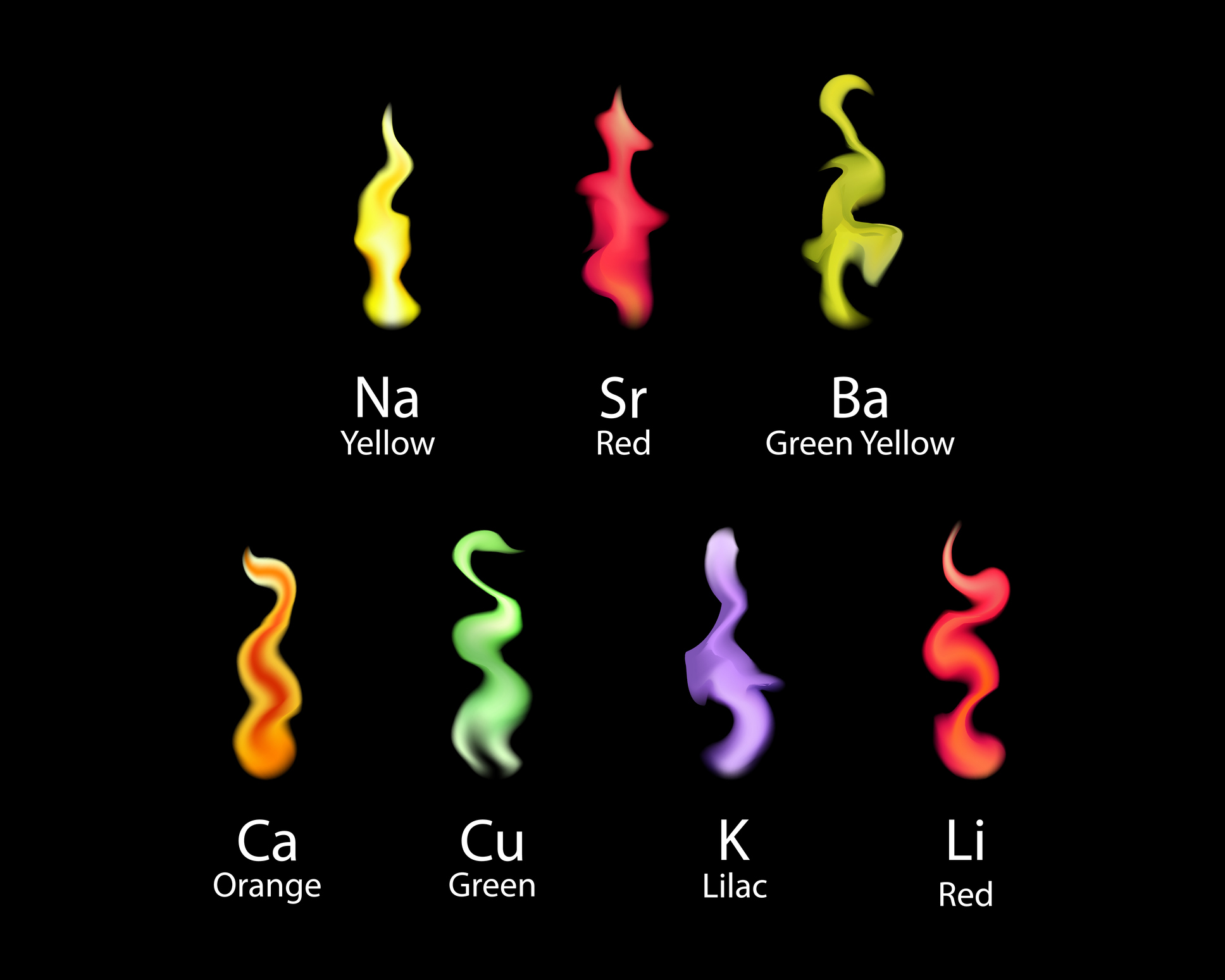
Fig. 2 - Flame Coloration Caused by the Addition of Metals
Findings
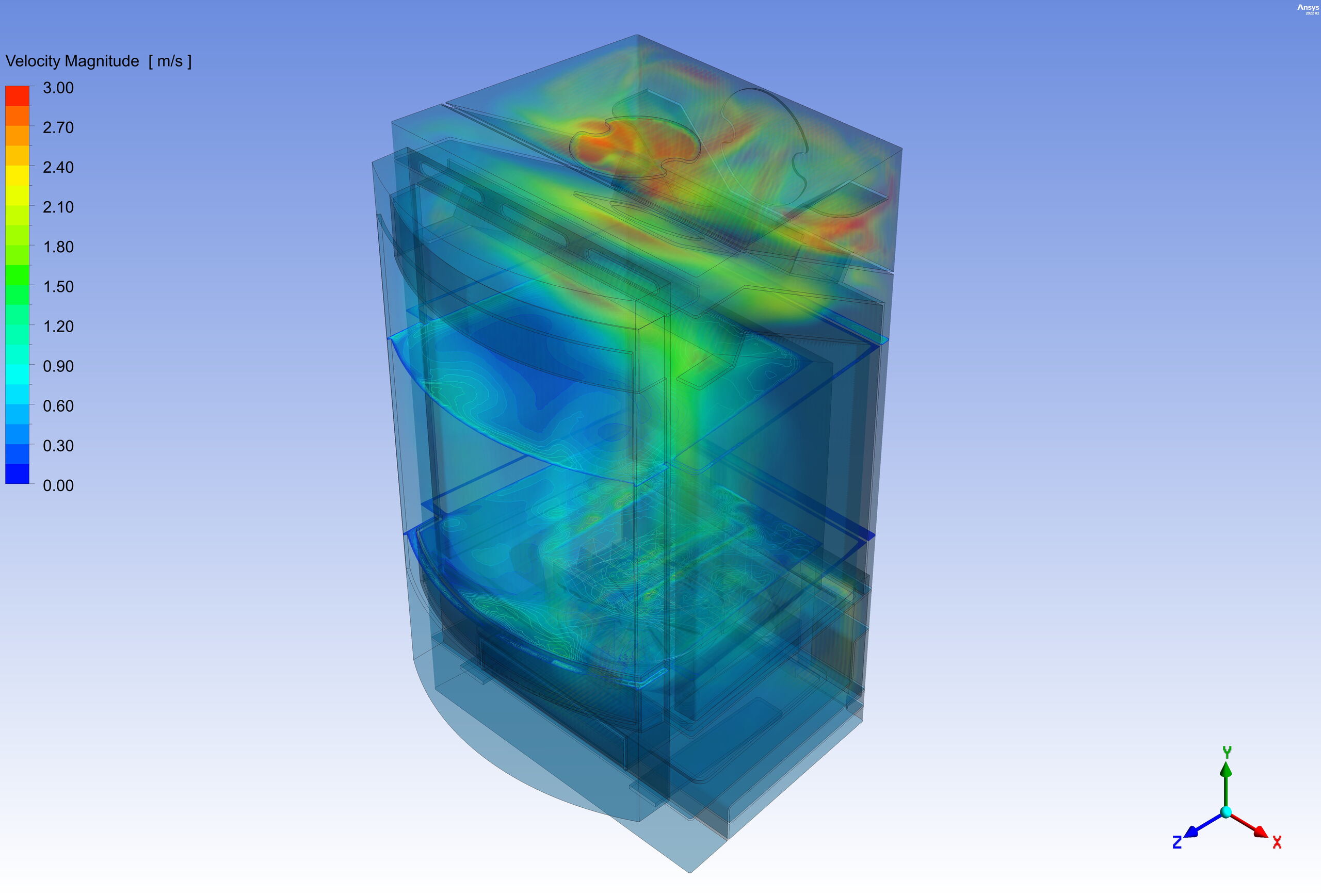
The fireplace is designed as a hydrogen space heater in accordance with Directive 2009/142/EC (Gas Appliances Directive) (GGRL). With an output of 0.6–3 kW, a maximum hydrogen demand of approximately 1.2 m³/h is required (at a supply pressure of 50 mbar). The combustion air volume is 3.7 m³ of air per m³ of H₂ at a lambda ratio of 1.5. The gas supply system, which was expanded for test operations, was also designed and configured accordingly. The DVGW-TRGI 2018 (Gas Installation), TRBS3146/TRGS 746 (Stationary Pressure Systems), and TRGS 720 (Explosion Protection). The design of the burner and combustion chamber was developed. In doing so, key elements of the combustion chamber design from the selected basic wood-burning stove body were initially adopted (Figure 1). The supply and exhaust air ducts were designed and revised. Additional structural components for the combustion chamber were designed and engineered for manufacturability. However, difficulties arose in the process engineering design of the burner. After involving the DBI – Freiberg (external service provider) for the design and engineering, it was determined that an initial design of the hydrogen burner in this power range had to be discarded. Based on tests already conducted at the DBI regarding the suitability of materials and designs for hydrogen applications, a design with a premix chamber burner is virtually impossible to implement, as the high flame speed of 1.75 m/s results in a very high tendency for backfire, as our own tests also show. Fluid dynamics analysis shows that, due to hydrogen’s low viscosity, thermoacoustic waves must be taken into account in the burner design. As a result of these findings, an optimized design was developed; however, it is currently still under discussion. Hydrogen burns without a flame color. By adding metal salts in low concentrations, a flame color can also be produced (Figure 2).