
Areas of application
Application-oriented cryopreservation of tissue transplants, tissue constructs, tissue models, cell-containing 3D gels and cell suspensions
Objective
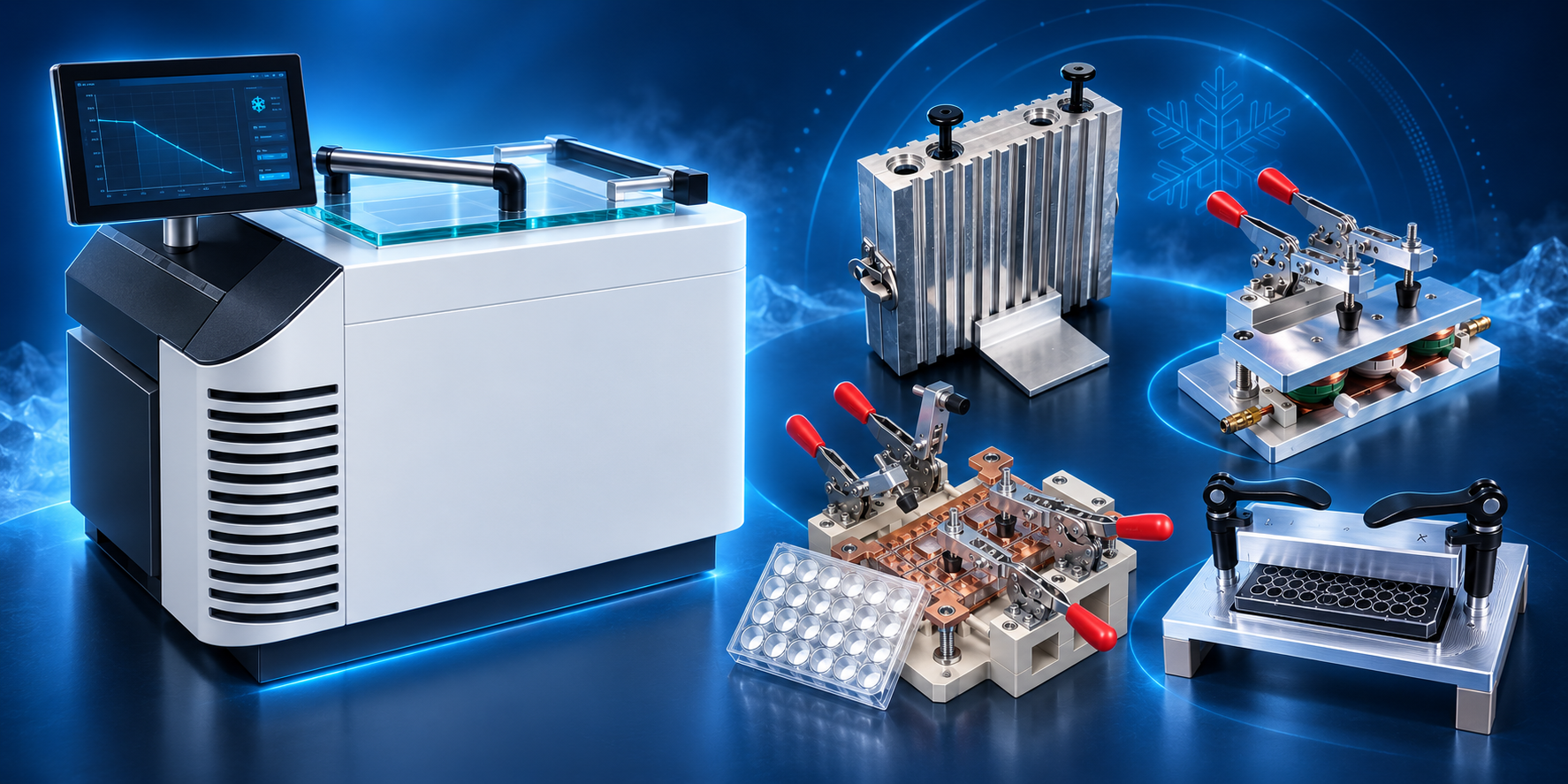
Our cryobiological and technical expertise in controlled rate freezing enables application-specific, and targeted cryopreservation of suspended and 3D-cultured cells, cell-based assays and systems, tissue constructs, and transplants of up to 4 cm² in size whether in vials, multi-well plates, ready-to-use syringes, or tissue containers.
 © ILK Dresden
Description
With 20 years of experience in the cryopreservation of cells and tissues - including the development of tailored cryopreservation technologies as well as DMSO- and serum-free cryopreservation protocols and freezing media - we are your expert partner for the application-oriented cryopreservation of biological products using controlled rate freezing (CRF). Controlled rate freezing is the life-sustaining cryopreservervation of cells and tissue by the use of a computer-controlled freezer. This process employs intracellular and extracellular cryoprotective agents (CPAs) and the application of a constant freezing rate which is optimized for the specific cell type and freezing medium. We design flexible cryopreservation processes tailored to our customers' requirements, drawing on our four core competencies:
Tissue Cryopreservation
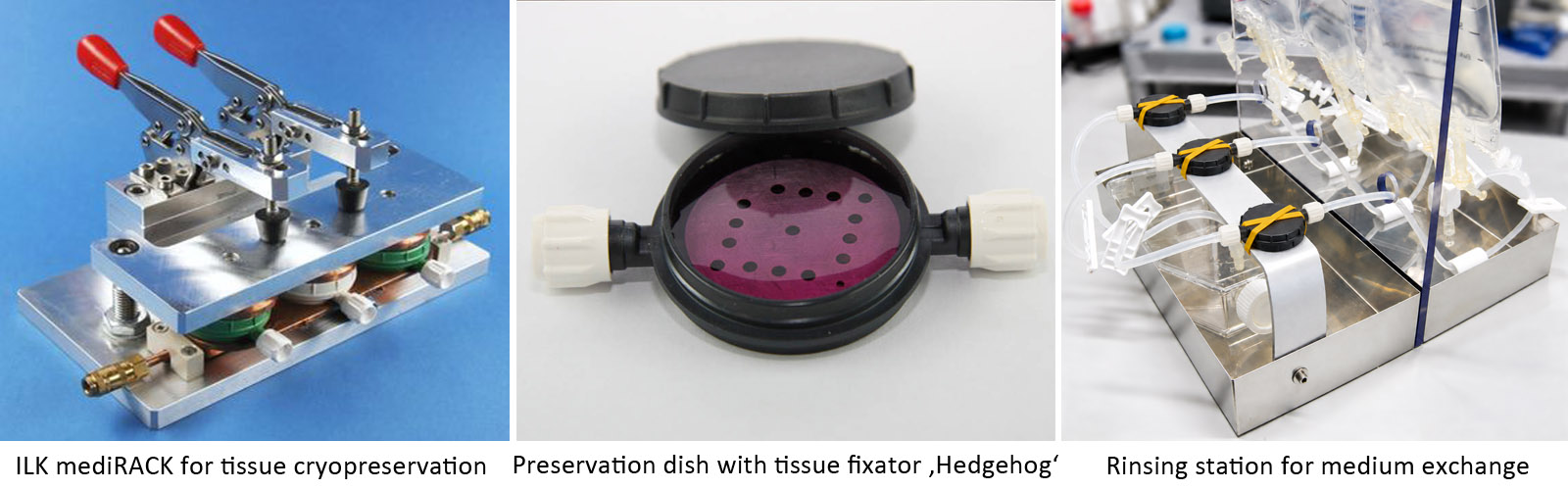
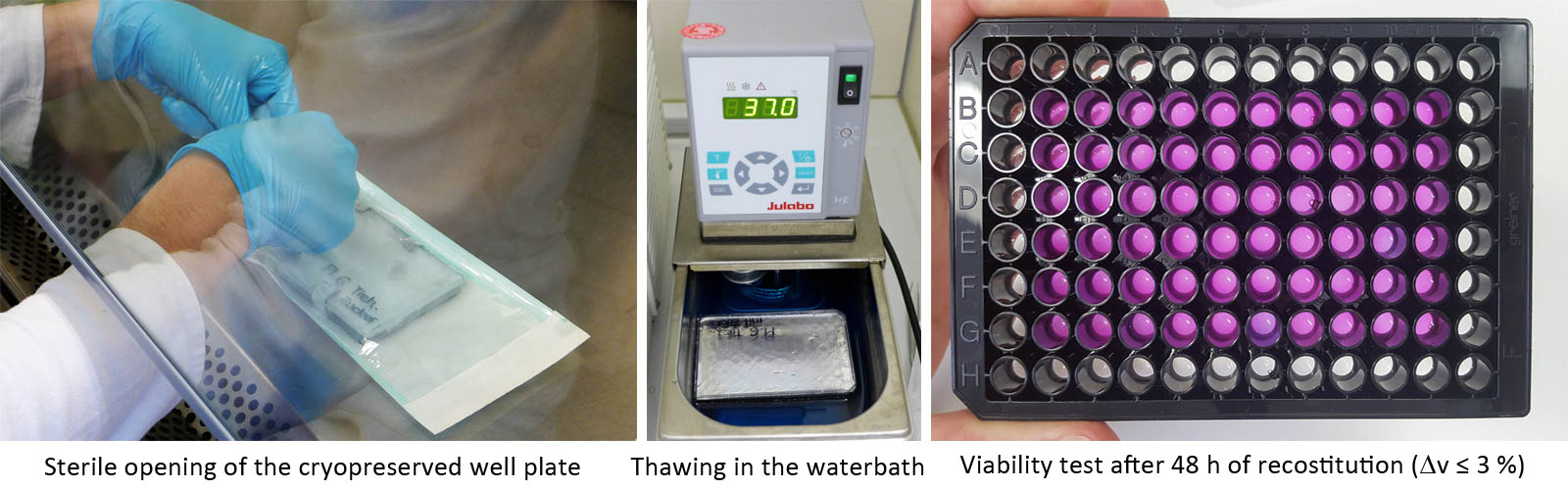
The Cryo-Competence Center for Life Sciences has developed a unique system for the viability-preserving cryopreservation, cryogenic storage (biobanking), and on-demand revitalization of 3D tissue constructs and transplants. The core component of our system is the ILK mediRACK. It serves as a heat exchanger for controlled, viability-preserving cryopreservation and as a cooling unit for uninterrupted refrigerated transport to the biobank. During cryogenic storage, it works as a stackable storage unit with integrated temperature monitoring. In combination with a mobile thawing station, it enables the revitalization of frozen tissue samples at the destination. As a freezing container for use with the mediRACK, we developed our "Dish-Hedgehog" system which features a mechanism for confusion-free tissue fixation. If needed, a compact rinsing station allows the culture medium to be exchanged for the cryomedium required for tissue freezing, as well as enabling the subsequent rinsing out of the cryomedium prior to use or implantation. The process is aseptic, requires only a few simple steps, and can be performed anywhere. A mobile thawing unit enables the revitalization of cryopreserved tissue directly at the point of use - whether in a research laboratory, a clinic, or a surgical practice.
 © ILK Dresden
Cryopreservation of 3D Cultures and Tissue Models
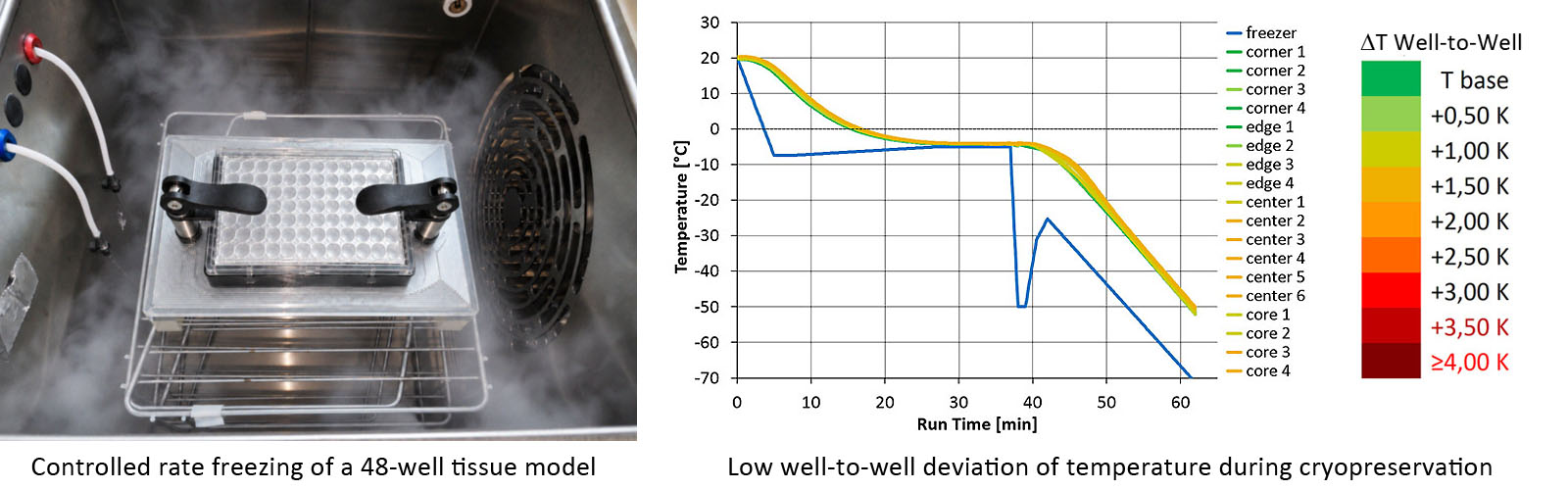
For the cryopreservation of adherent cells, 3D cultures, and tissue models in multi-well and microtiter plates, we offer a unique modular system comprising DMSO-free, cell-friendly, and clinically approvable freezing media and cryopreservation protocols suitable for adherent cell cultures, cell-laden gels, 3D cultures, and tissue models of limited complexity along with our ILK multiRACK for the cryopreservation of well plates by the use of a controlled rate freezer.
The ILK multiRACK combines the best of both worlds: it transfers the high precision and temperature uniformity of modern, conduction-based freezers for multi-well plates to nitrogen-cooled freezers, which offer high cooling capacity, rapid response times, and the ability to achieve high freezing rates. The system enables the simultaneous cryopreservation of up to 96 samples at constant freezing rates ranging from 0.1 K/min to 35 K/min, with sample-specific temperature deviations remaining below 2% throughout the entire freezing process. This allows for gentle, function-preserving cryopreservation of sensitive stem cells as well as the loss-free cryopreservation of complex tissue structures.
 © ILK Dresden
 © ILK Dresden
For clinical applications - such as cell therapies, 3D cultures, and tissue constructs that do not allow for medium exchange - we have developed chemically defined, serum- and DMSO-free cryopreservation media and procedures. These rely on the cryoprotective properties of cell-compatible, medically approvable substances (compatible solutes) that that provide both intracellular and extracellular cryoprotection and can remain in the product after cryopreservation.
Cryopreservation of ATMPs and subcellular therapeutics
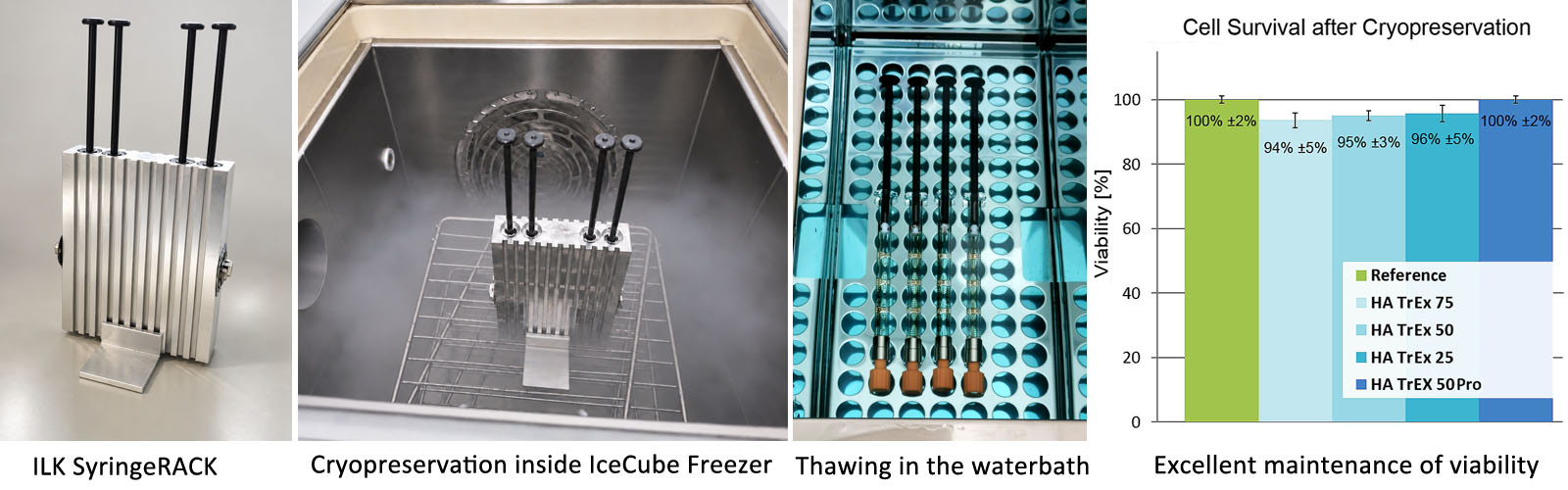
Cell and gene therapeutics formulated as suspensions or cell-laden gels (e.g., wound fillers) can be cryopreserved directly within a sterile, sealed product syringes using controlled rate freezing. To this end, we developed our SyringeRACK and application-specific freezing protocols for the DMSO- and serum-free cryopreservation of cell-containing medical products.
For the cryopreservation of cell-containing gels without a loss of viscosity, we developed a chemically defined, cryopreservable cell-carrier gel as part of our space research activities. Unlike protein-based ECM gels (such as Matrigel), this gel fully retains its stability during cryopreservation.
The cryopreserved product syringes are watertight and sterile-sealed. They can be transferred directly from cryogenic storage to a water bath and thawed in less than two minutes without a loss of cell viability.
Cryopreservation of cell suspensions
In addition to specialized technical processes for the cryopreservation of tissue implants, 3D cultures, tissue models, and cell-based therapies, we also cryopreserve cells in suspension using standard commercial packaging like so-called cryovials.
Here, too, our extensive experience with controlled-rate freezing enables us to tailor cryopreservation protocols to specific customer requirements, optimize them for sensitive cells or defined application scenarios, scale them up, or adapt them to various packaging formats.
