As early as 2008, the Food and Agriculture Organization (FAO) estimated that industrial livestock farming was the second or third leading cause of the most serious environmental problems: climate change, species extinction, land degradation, and water scarcity. In contrast, carbon farming sequesters carbon from the atmosphere into the soil.
Dipl.-Ing.
Ralf
Heidenreich
Areas of application
Applications of plant protein separation following a spray-drying process, as well as in CIP and fire/explosion protection applications
Objective
The use of fabrics in filter bags for process gas dust removal builds on numerous technological improvements and advancements in the field of textile engineering in recent years. The following functionalities are significant and influential in this development work:
• Use of new fiber materials and production of fine fibers
• Spinning techniques for producing fine and stable weaving yarns
• Twisting copper threads into the base material to:
o Achieve continuous electrical conductivity throughout the material o Create a fungicidal effect through copper ions during the washing process
• Weaving techniques for producing specific fabric structures
The innovative and comprehensive possibilities in fabric production support the development of specific filter fabrics for product extraction. The project work in this area involves the development and production of filter fabrics with the following properties:
• Dense and stable fabrics with high thread density and low weight per unit area • Ability to produce the fabrics using circular weaving technology • Temperature-resistant fabrics up to 120 °C • Resistance of the fabrics to washing, hydrolysis, and oxidation • Fabrics with good pressure and separation performance in the filtration process • Regenerability of the fabrics using compressed air pulses • Cost-effective and recyclable fabrics
The use of innovative filter fabrics in filter hoses for product recovery in the filtering separator’s operating process is characterized by two phases: filtration and regeneration. Filtration and regeneration form a dualistic relationship. They are interdependent and influence one another, yet they are also mutually exclusive in terms of timing within the filter hose. Compressed-air regeneration of the filter fabric hoses requires the following specific functionalities, which result, among other things, from the altered filtration behavior of the flat fabric compared to the three-dimensionally oriented needle-punched nonwoven:
• Uniform regeneration of the filter bags on all sides • Energy-efficient regeneration of the filter bags with adjusted pulse intensity and effective cleaning • A regeneration regimen designed to enable long filtration cycles.
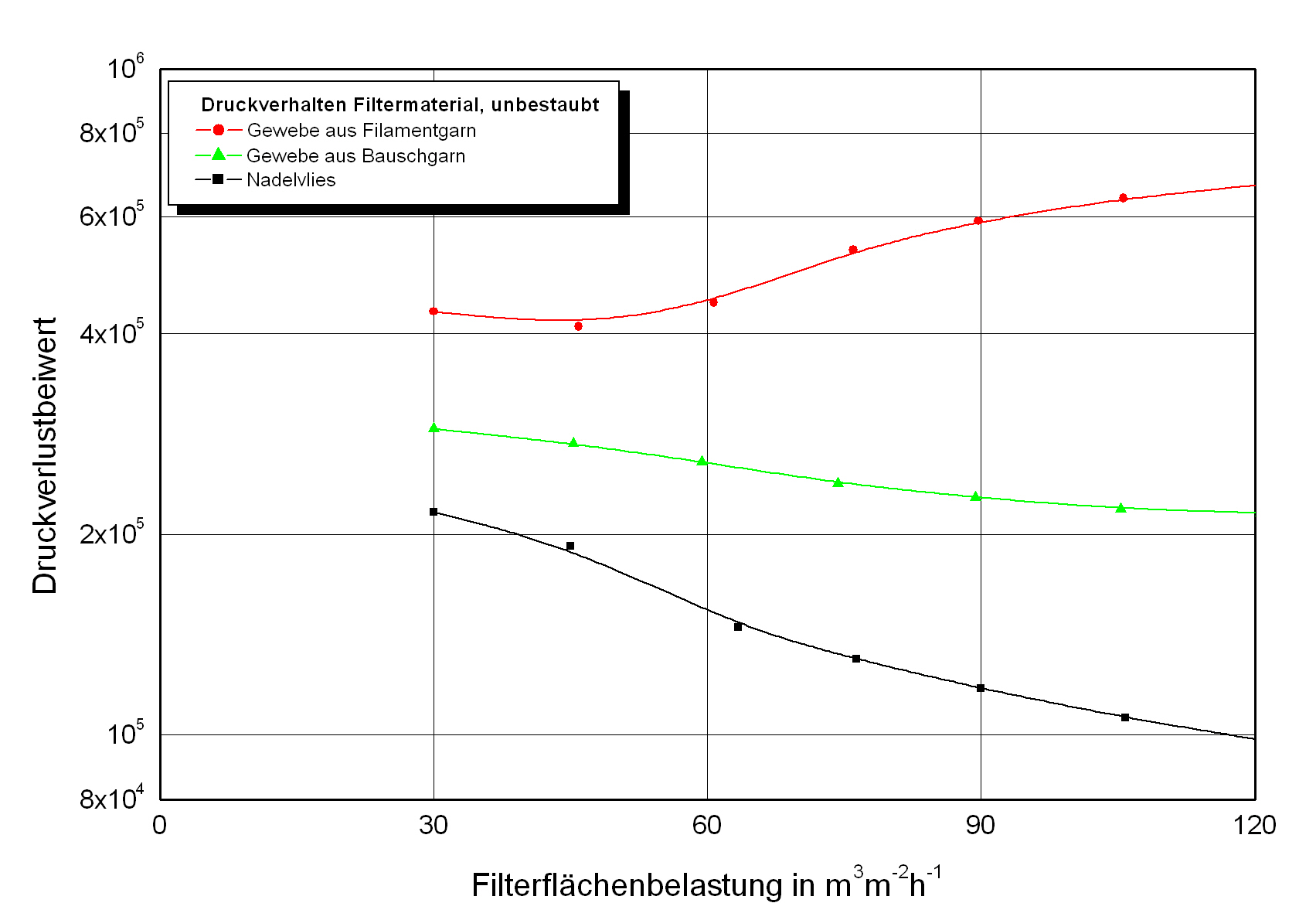
Fig. 2 - Comparison of the Pressure Drop Behavior of Round-Woven Fabric and Nonwoven Fabric
Procedure
The technical approach is based on the following fundamental considerations for ensuring that the final product is free of fibers:
• Due to the manufacturing process involving staple fibers, nonwovens and needle-punched felts are prone to fiber release; therefore, circular-knitted filter hoses made of food-grade synthetic fibers should be used for this application.
• The optimal configurations for these filter materials are:
o Weave density and type, fiber fineness, twisting, base material o Mesh size, coating, o Length-to-diameter ratio, o Head and foot geometry and fastening,
• and the operating parameters:
o filtration rate, regeneration parameters (pressure, pulse intensity), o maximum pressure drop, cleaning frequency, clean gas concentration, energy consumption, o cake formation and adhesion properties must be determined.
• For a comparative test prior to production use and for certification, a test procedure must be developed, validated, and verified in practice that covers all phases of operation—both filtration and wet washing. To this end, procedures must be developed and tested, which poses a particular challenge for fiber analysis in the bulk material.
• However, the method developed here can then also be used and applied in practice for product analysis, thereby contributing to product safety.
Findings
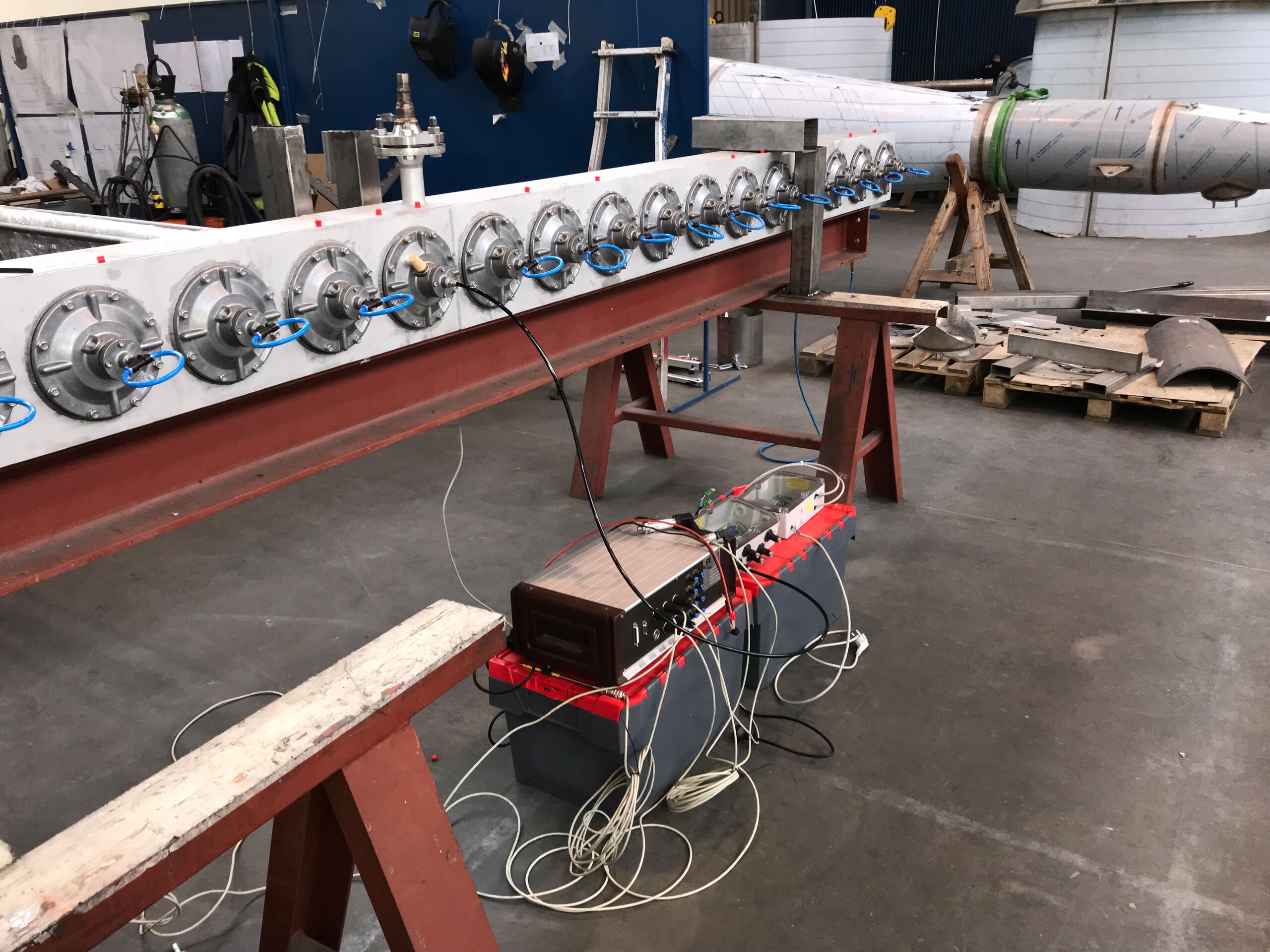
Methods used to date employ a cyclone for material separation. Due to the cyclone’s separation behavior, approximately 50% of the so-called cut-off size is carried over to the next separation stage. This fraction is classified as low-grade due to the risk of fiber carryover. The objective is to make this fraction usable in the same way as the high-grade fraction. The cleaning of the filter material is indeed a critical parameter in this process. However, the specific energy consumption—which encompasses both filtration performance and the cleaning (regeneration) of the filter material—is considered a more essential criterion. A total energy consumption of 400 W/1000 m³/h is defined as the target value here. Initial results, however, show that the pressure drop of the round mesh is comparatively high (Figure 2). Regeneration using compressed air pulses is therefore of crucial importance for minimizing the average pressure drop during operation. Regeneration varies depending on the type of inflow and the pulse application. Studies conducted by ILK Dresden to achieve gentler regeneration were carried out using the so-called “inflatable hose” technique. The results showed a lower dust concentration in the clean air. In food processing, high demands are placed on surfaces. Consequently, the components for pressure regeneration/cleaning are made of stainless steel and electropolished (Figure 1; pictured: nozzle lance for measurement with foil).