
Areas of application
To improve energy efficiency, reduce operating costs, and enhance the reliability of systems through predictive maintenance
Objective
Modern refrigeration systems, heat pumps, and production environments generate large amounts of data that must be analyzed. Data-driven models optimize manufacturing parameters, while surrogate models accelerate materials research. Visualizations of high-dimensional datasets make complex relationships practical for real-world applications.
Description
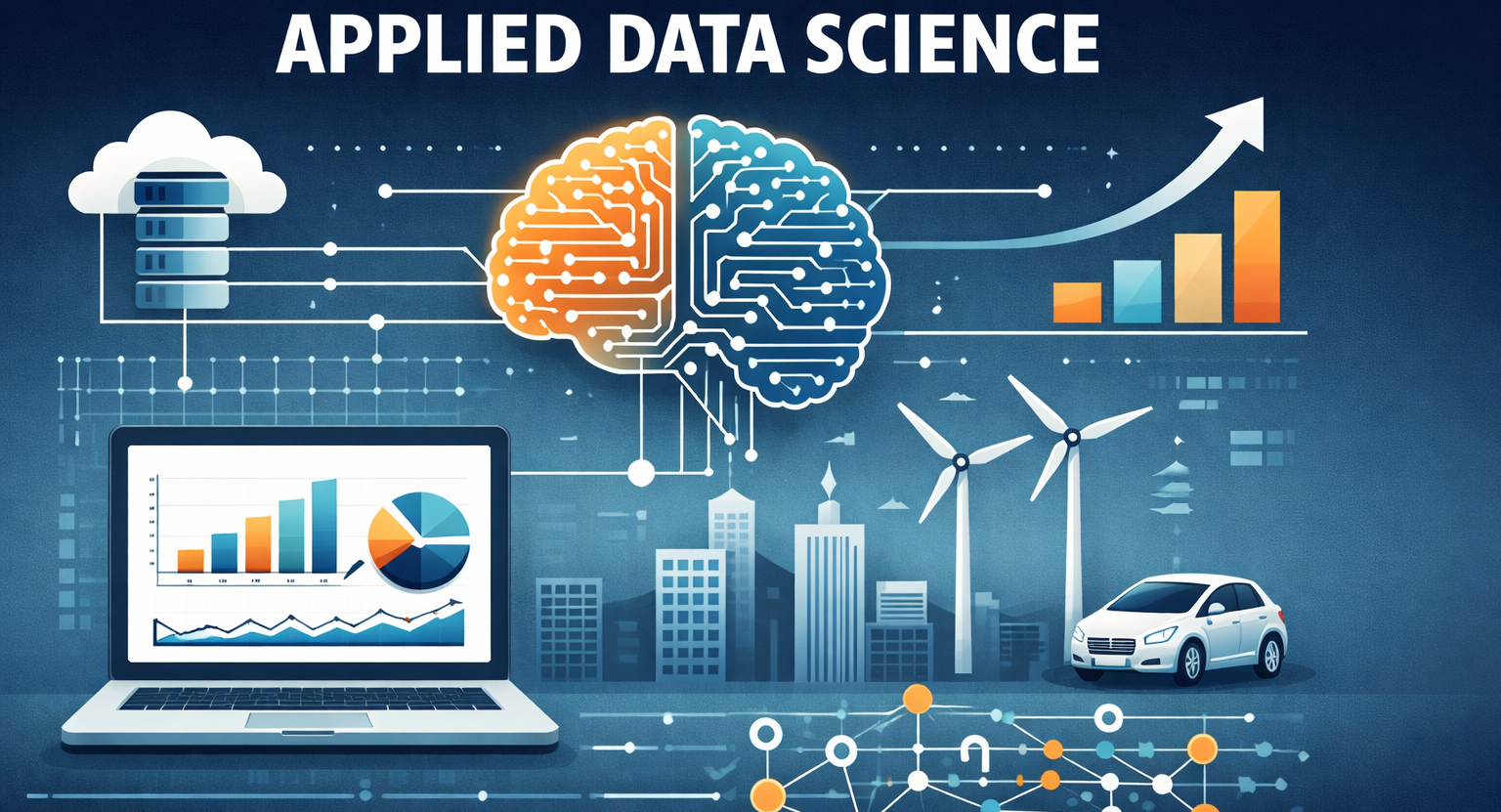
Industrial research is increasingly shaped by methods of applied data science. More and more sensors in refrigeration sytems and heat pumps are continuously generating large volumes of data that can be analyzed using machine learning and statistical modeling—with direct benefits for efficiency, quality, and innovation. In process optimization, data-driven models help continuously adjust manufacturing parameters to reduce scrap and maximize yields. In materials research, statistical analyses and simulations accelerate the investigation of existing materials and the search for new ones by replacing time-consuming physical experiments with targeted, model-based analyses. In the field of quality assurance, statistical models and anomaly detection enable faster and more consistent testing of components and products and provide insights into the causes of problems. Last but not least, data visualization plays a central role: complex relationships derived from high-dimensional measurement and simulation data become tangible for researchers, engineers, and practitioners through interactive dashboards and visual analysis tools—thus forming the basis for well-informed decisions. What all these applications have in common is that data science specifically enhances existing engineering knowledge—and transforms operational data into reliable decision-making foundations.
