Areas of application
For a application map of open, semi-hermetic or hermetic compressors refrigerating capacity, power absorbed, COP, volumetric and isentropic efficiency are determined.
Objective
Performance testing of refrigeration compressors in accordance with DIN EN 13771-1:2017 and DIN EN 12900 combines standardised measurement methods with a uniform presentation of performance data. The benefits include high comparability and reliable compressor data. Outcomes: more precise design, higher energy efficiency, greater planning certainty and transparent mark
Description
The generation of cooling capacity in refrigeration systems and heating capacity in heat pumps accounts for a significant proportion of Germany’s total energy demand. The energy efficiency of these systems is largely determined by the quality of the refrigerant compressor. It is therefore important for manufacturers of refrigeration units, heat pumps or system integrators to be aware of the performance parameters of the various types and designs when selecting a compressor.
The relevant data is determined in accordance with internationally standardised procedures and presented in the manufacturers’ catalogues and selection programmes. The application of these methods ensures internationally comparable test results and forms the basis for energy efficiency and performance data in product documentation. It plays a central role in certification and in compliance with (European) ecodesign and performance evaluation directives. Manufacturers use it to demonstrate the conformity of their products with European market requirements.
The determination of performance data (cooling capacity, drive power, COP, coefficient of performance, isentropic efficiency) is carried out internationally according to two different philosophies:
Both approaches describe detailed test procedures for determining parameters such as cooling capacity, power consumption and efficiency. They specify reference conditions, measurement methods and calculation procedures to ensure comparability and reproducibility.
A key feature of the American standard ASHRAE 23 is its very high measurement accuracy. Only very small control deviations from the setpoints are permitted under steady-state conditions. This standard does not provide for a conversion method to correct these control deviations. Measurements on the test benches required for this purpose are therefore very complex and costly.
The European standard EN 13771-1:2016 includes, as a traditional and alternative approach, a correc-tion procedure for the differences between the basic test conditions (setpoints) and the actual mea-sured values. The aim of this procedure is also to achieve greater accuracy in the test results. How-ever, this makes it possible to allow for greater tolerances when setting the steady-state conditions. The method used represents a practical model designed to enable correction within the tolerances specified in the standard. The advantage of this test procedure is that the steady-state condition of the test compressor is reached more quickly and the test rig is not as costly.
Part 1 of EN 13771-1:2016 primarily deals with the testing of air-cooled compressors. Other parts of the series of standards (e.g. Part 2 for water-cooled compressors) cover different types of construction and application. It applies – regardless of the refrigerant used – to single-stage and multi-stage compressors used in refrigeration systems, air-conditioning systems and heat pumps.
For a defined operating map of open, semi-hermetic or hermetic, single-stage or two-stage refrigerant compressors (types: reciprocating, rotary vane or scroll), the cooling capacity, drive power, COP, delivery rate and efficiency are determined, amongst other parameters.
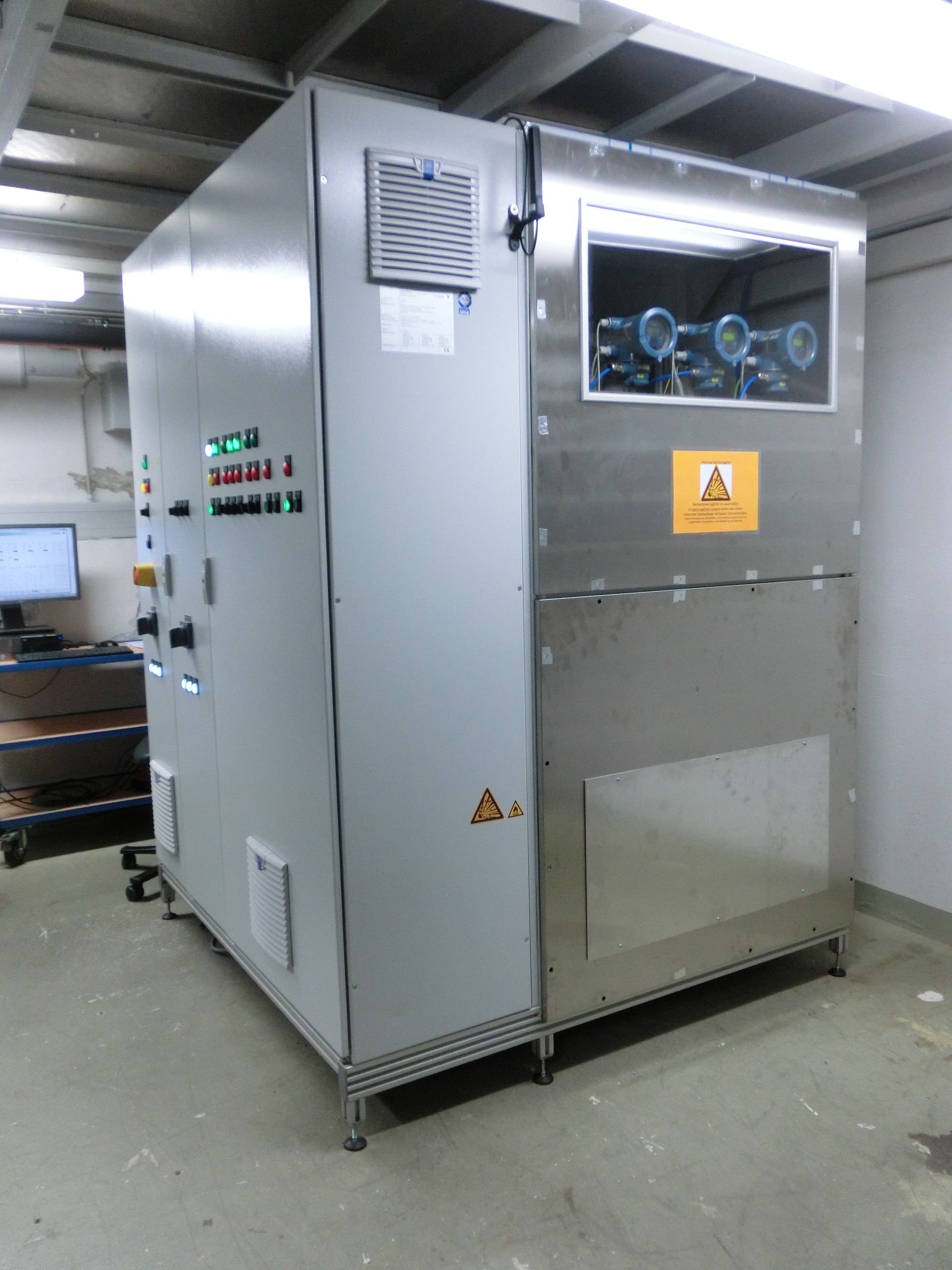
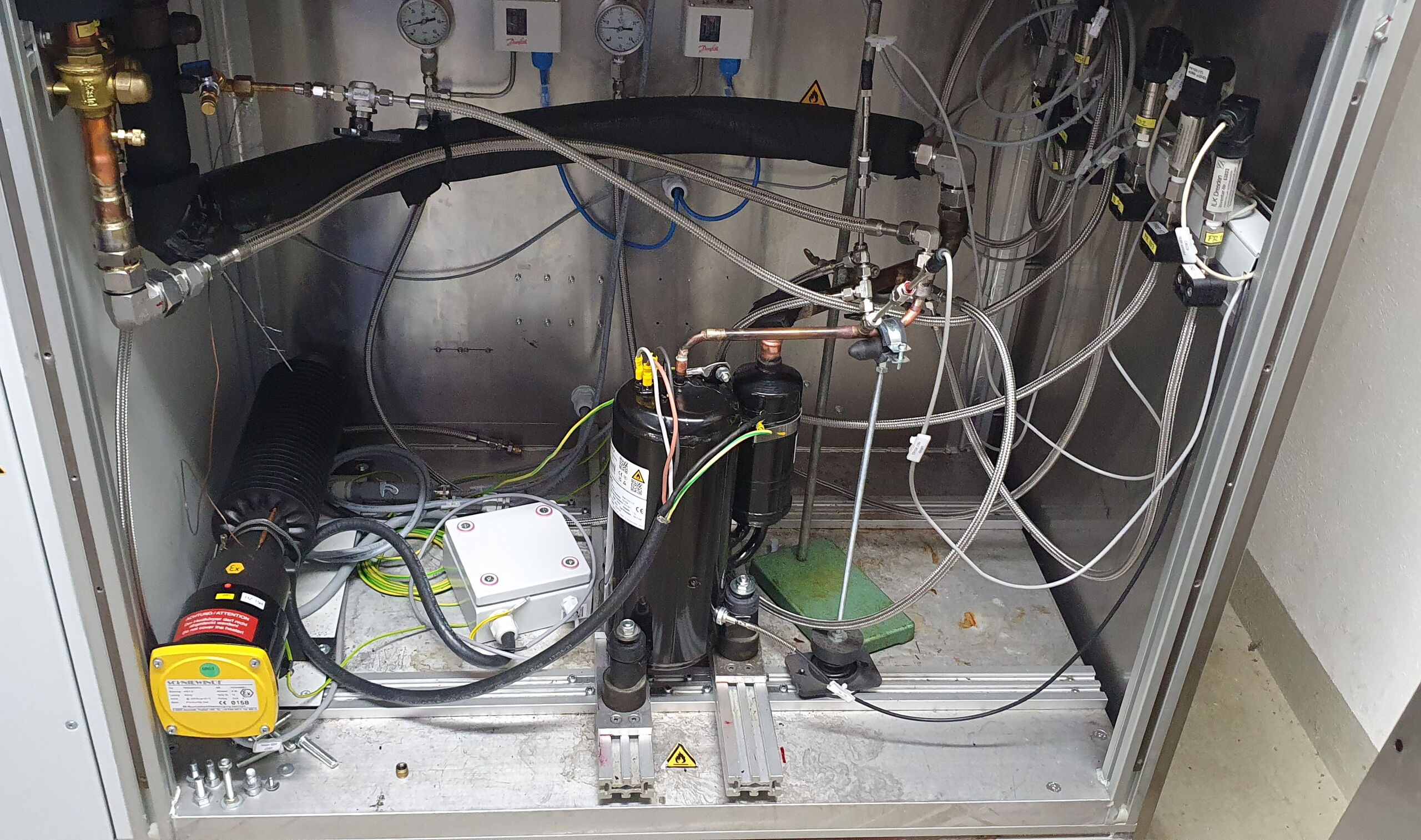
The tests are carried out on compressor test benches of a suitable capacity (gas loops with partial liquefaction or on complete refrigeration circuits). Up-to-date calibration of the measurement systems is, of course, ensured.
In practice, regulations such as the F-Gas Regulation and PEFAS mean an increased use of flammable refrigerants (R) in classes A2 and A3.The tests can therefore be carried out using refrigerants A1, A2L and A3 (including R290, R600 and R600a).
The source of the refrigerant property data is the ASEREP property database from ASERCOM.