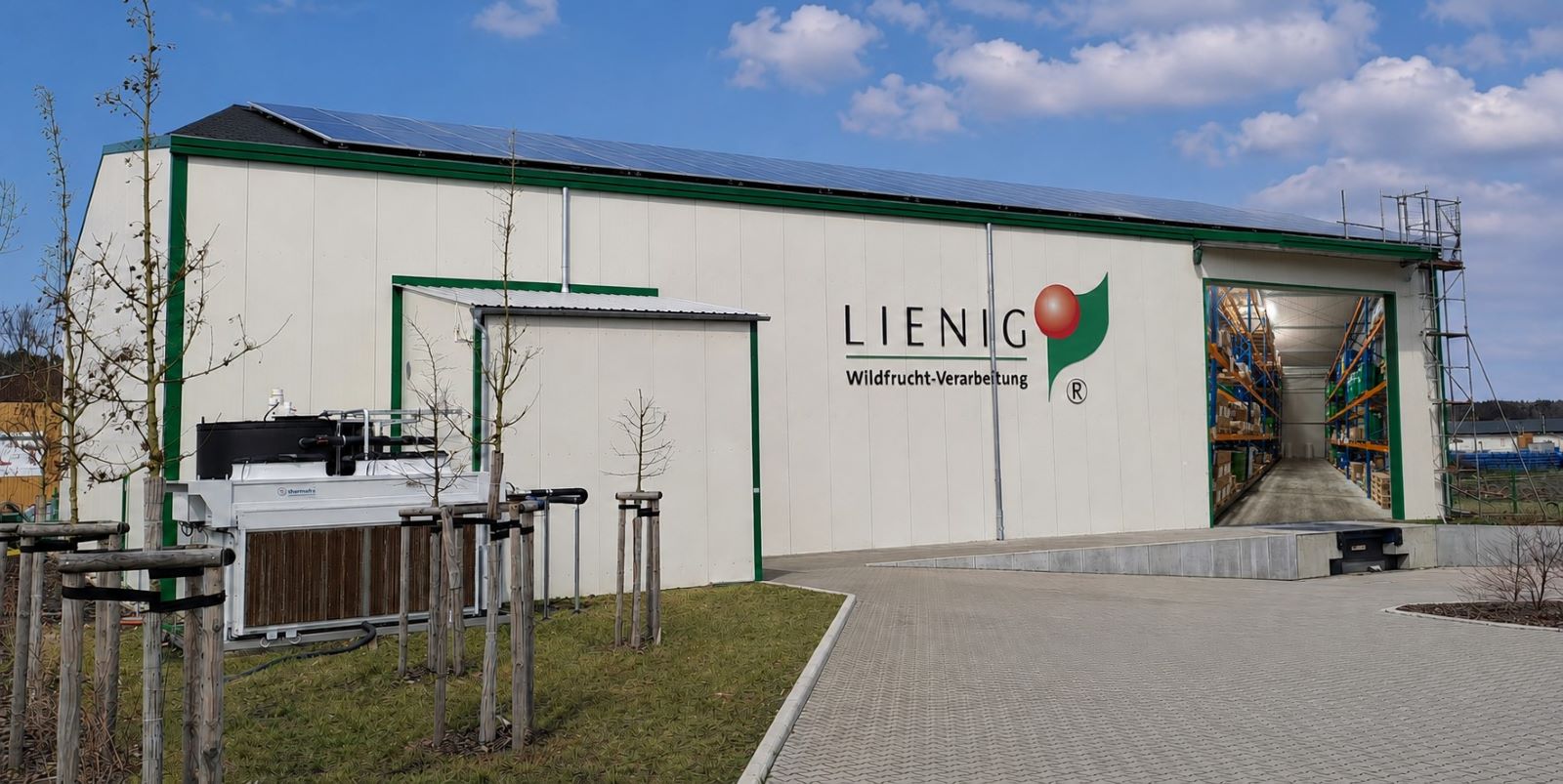
The completed system, which is being monitored and further developed as part of the project, demonstrates how sustainable, cost-efficient cooling and heating is already a reality today: The energy comes from the rooftop PV system, surplus energy being stored in the form of thermal energy (refrigerated goods and ice slurry). Natural refrigerants R290, R744 are used.
Dipl.-Ing. (FH)
Carsten
Heinrich
Areas of application
Cold stores, logistics warehouses, refrigeration systems, food industry
Objective
The target is to establish the technology:
PV combined with thermal storage in the form of refrigerated goods and
ice slurry,
plus forecast-based control.
This involves demonstrating the technology, verifying its efficiency, and further developing operational reliability whilst reducing investment costs. In parallel, a further plant is being set up at Sachsen-Kälte.
Setting up a comprehensive monitoring system, including the recording of all thermal and electrical energy flows (electrical power meters, flow sensors, temperature sensors), temporal and spatial temperature distribution in the cold store (establishment of a LoRaWAN measurement system), efficient storage of data in a time-series database, a dashboard with online analysis, and evaluation of efficiency metrics.
Further development of the forecast-based control system incorporating current measurement values, transferring to a generic self-learning system.
Further development of safe operation of the ice slurry system (methods for measuring the ice fraction, determining operational limits, e.g. maximum ice fraction, and evaluation of cost-saving options.
Demonstration of the plant:
(a) in the form of a virtual tour,
(b) as an exhibition object (interactive 3D miniature model) and
(c) information boards on site.
Development of generic design tools.
Application of the findings to a plant be built in parallel at the site of Sachsen-Kälte GmbH.
Publication and participation in expert committees of relevant user groups, e.g. the food industry
Fig. 4 - PV generation and power demand of the main components—top—as well as bearing temperatures and ice content in the liquid ice for the period May 20–May 24, 2025
Findings
The measurement system is fully operational; the data is stored in a time-series database and visualised in real time via a dashboard, with access to historical data The system has now been in operation for four years and supplies low-temperature, medium-temperature and fresh-product storage facilities with a high level of operational reliability The interaction between controllers and components via a wide variety of bus systems is not always straightforward and currently still involves a considerable amount of additional work. The demonstrators are already at an advanced stage; the virtual tour will be available here shortly.